Only 1 in 7 pieces of agent work starts with a person typing. What five weeks of real agent work inside businesses shows about routines, handoffs and teams.

We studied five weeks of real agent work inside businesses. The number that changed how I think about agents is about who starts the work.
For the last year, most of the arguments I have had about agents were really arguments about prompts. Which model writes the better email. How long the context window is. Whether the answer can be trusted. All of them assume the same picture: a person types, an agent answers, and the person carries the answer somewhere else.
Mike and I just published The State of AI Agents for Business, built on every piece of agent work across businesses on Dock from October 1 to November 5. I expected the report to be about what agents do. The finding I keep returning to is about when they start.
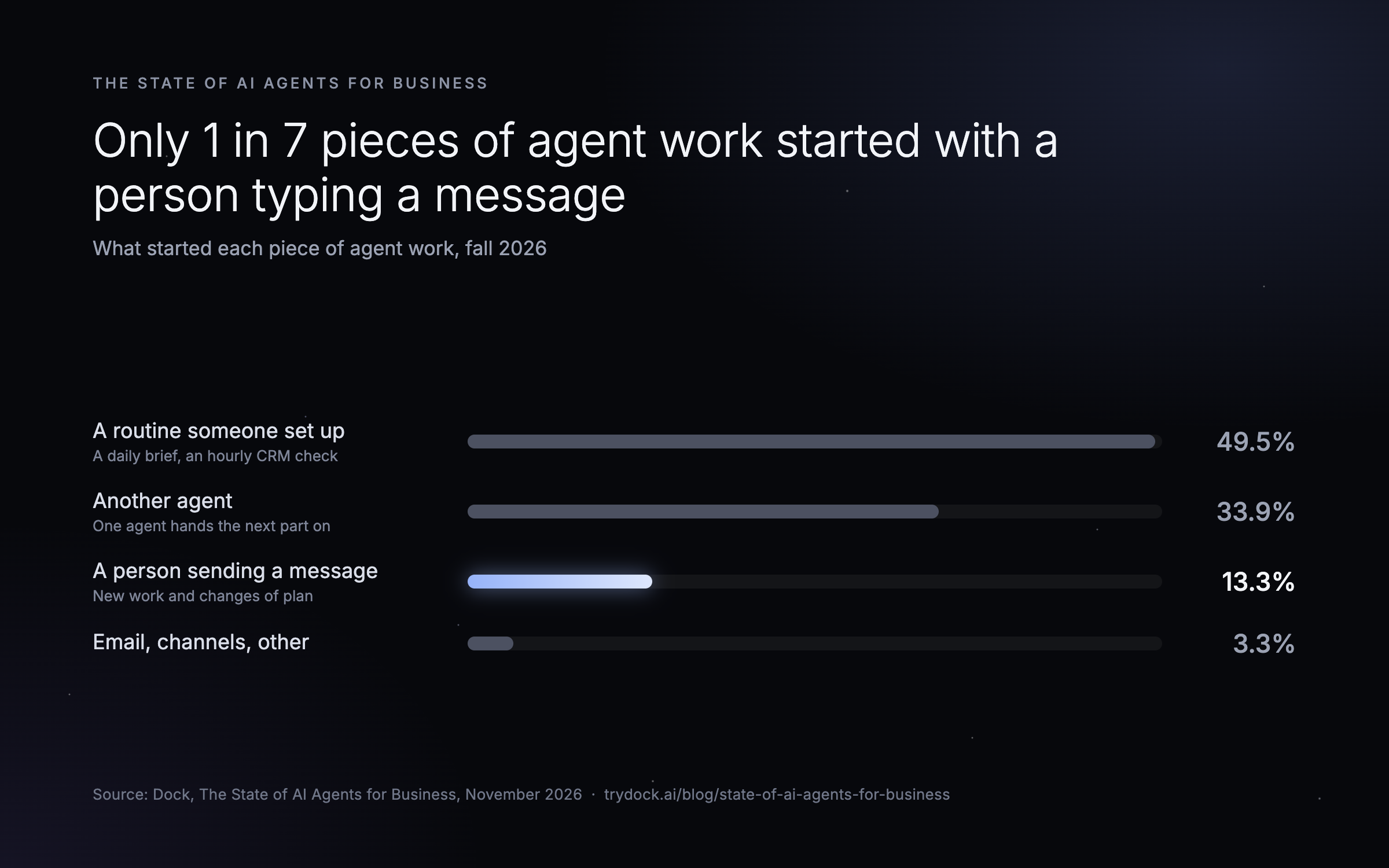
Only 1 in 7 pieces of agent work started with a person typing a message.
Asking turned into setting up
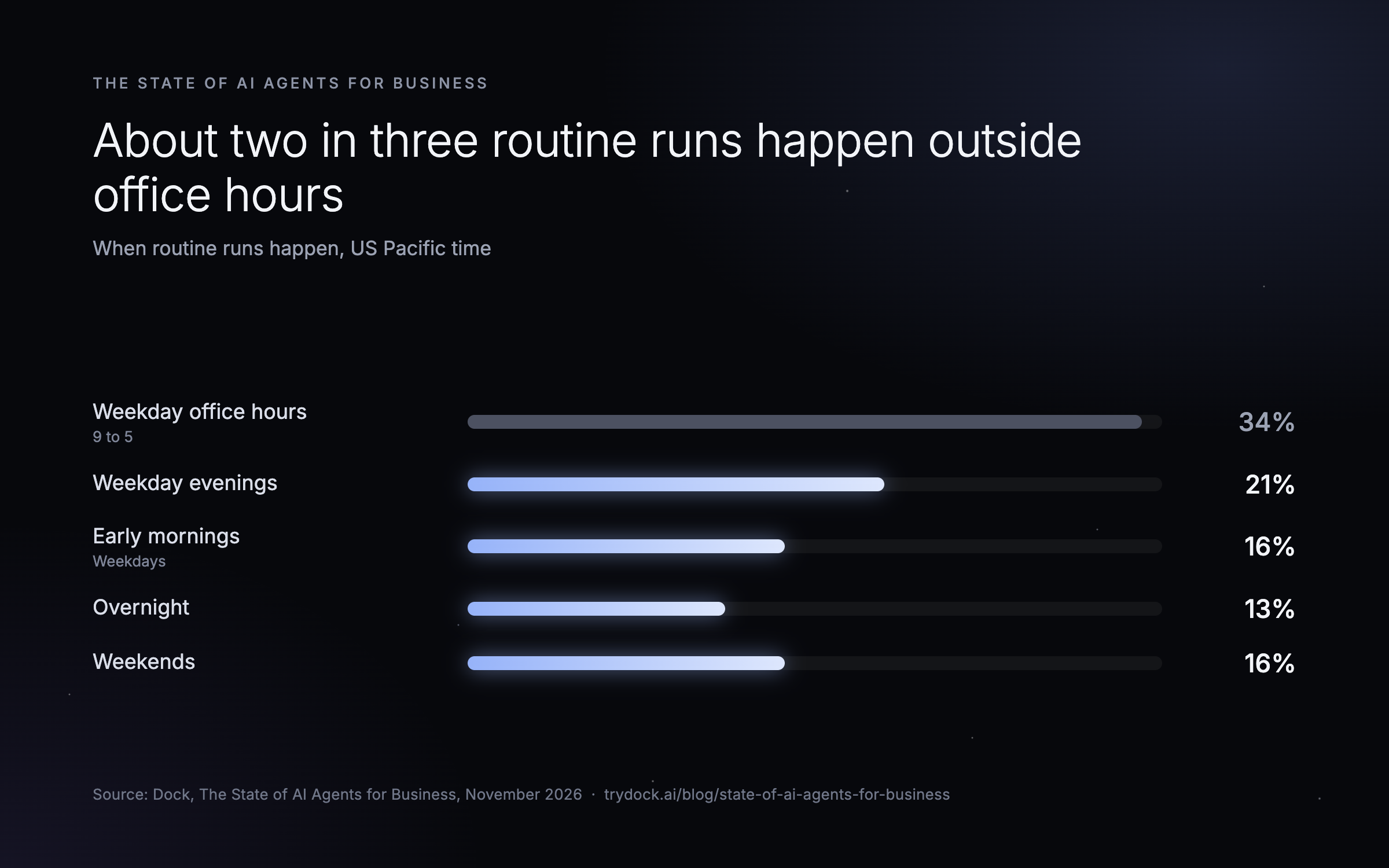
Half of all agent work ran on a routine. Someone decided once that an agent should prepare a brief every morning, check the CRM every hour or send a report every Friday, and the agent kept doing it. About two in three of those routine runs happened outside weekday office hours, in the evening, overnight or at the weekend.
I think of this as delegation that stays delegated. Most of us have handed something to a colleague and then spent the next month reminding them about it. A routine removes the reminding. The decision gets made once, and it keeps getting carried out after the person who made it has logged off. (We wrote more about what this looks like inside a business in agentic workflows.)
That changes the owner's job. The skill becomes deciding, in advance, what should happen without you. Which reports, how often, and to whom. That is closer to management than to search.
Agents pass work to each other
A third of agent work was started by another agent. One agent finished its part and handed the next part on. For every piece of work a person started by message, agents started about two and a half for each other.
This surprised me most, because it is the part a chat window can never show you. In chat, the handoff is the person. You copy the research into the next conversation, paste the draft into the email and remember to follow up. In the businesses we studied, a real share of that carrying has moved off people.
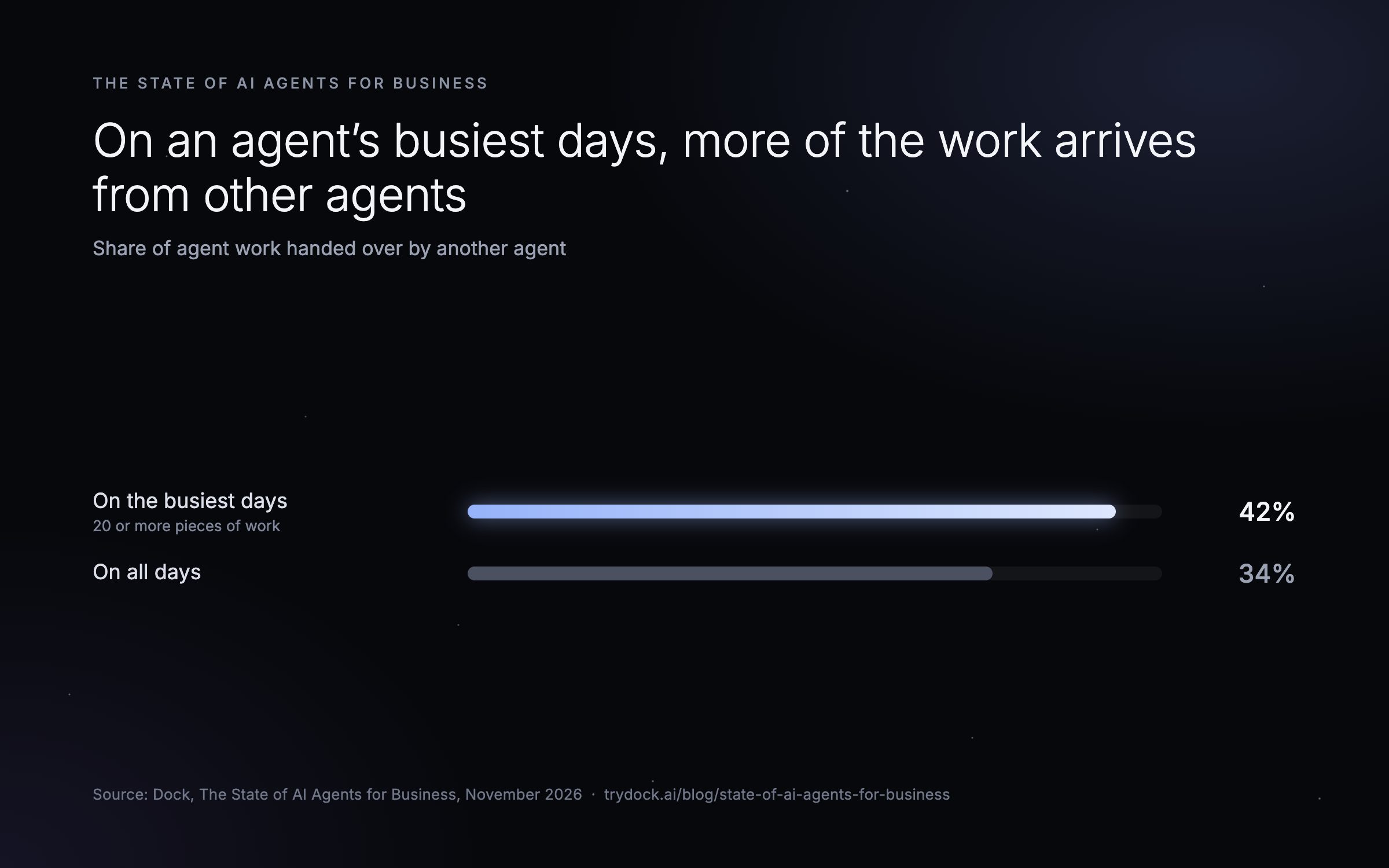
The busiest days make the pattern sharper. On days when an agent handled twenty or more pieces of work, 42% of it arrived from another agent, against 34% on an average day. People started roughly one piece in seven either way. What separates the busiest agents is setup: a routine of their own and a steady flow of work from the agents around them.
The shared agent does the most
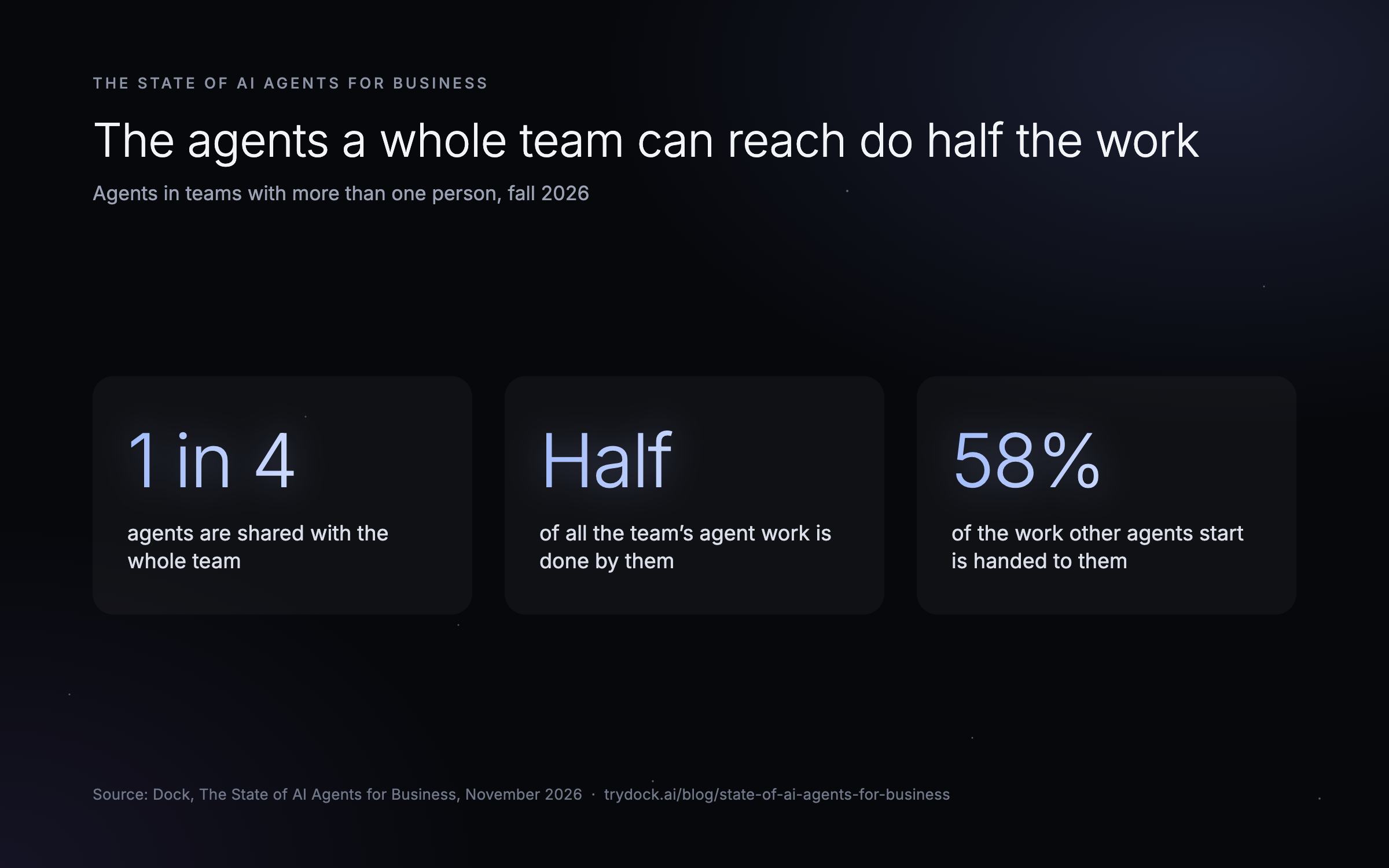
In teams with more than one person, about a quarter of agents were shared with human colleagues. That quarter did half of all the work, and it was handed 58% of the work other agents started.
This is the closest thing in the data to how a real team behaves. The person everyone goes to for research ends up doing most of the research. Agents follow the same pattern once more than one person can reach them. A private agent helps one person. A shared one becomes part of how the team moves work. (More on that in multiplayer AI.)
What this does not prove
Five weeks is short. The data comes from businesses that chose Dock, so they are already more willing than most to let agents run. A few heavy teams account for a large share of the busiest days. I would not read any of these numbers as a forecast for every company.
What the data can show is direction. Most public statistics about agents are surveys of what companies plan to do. This is a record of what agents did. In the businesses that have set agents up properly, more and more of the work starts without anyone asking.
What stays with people
None of this makes people less necessary. In the same companies, people set the plans, made the final calls on the documents that mattered and decided what went out. Direction, judgment on money and pricing, relationships with customers and accountability when something goes wrong all stayed with a person.
What changes is the shape of a good week. It becomes a short list of decisions, with the work behind each one already done.
In Agent Washing I wrote that the test for a real agent is what it assumes about who does the work. This report gave me a second test, and it is simpler to apply. Who starts the work? If the answer is always you, you have a faster way to ask. If the answer is often a routine you set up last month, or another agent finishing its part, you have something much closer to a team.
Most companies are still on the first side. I don't think they stay there long.
Source note: This essay draws on The State of AI Agents for Business (Dock, November 2026), based on anonymized agent activity across businesses on Dock from October 1 to November 5, 2026.